How to Get Found When Locals Search 'Electrician Near Me'
16 December 2025 · By Lian
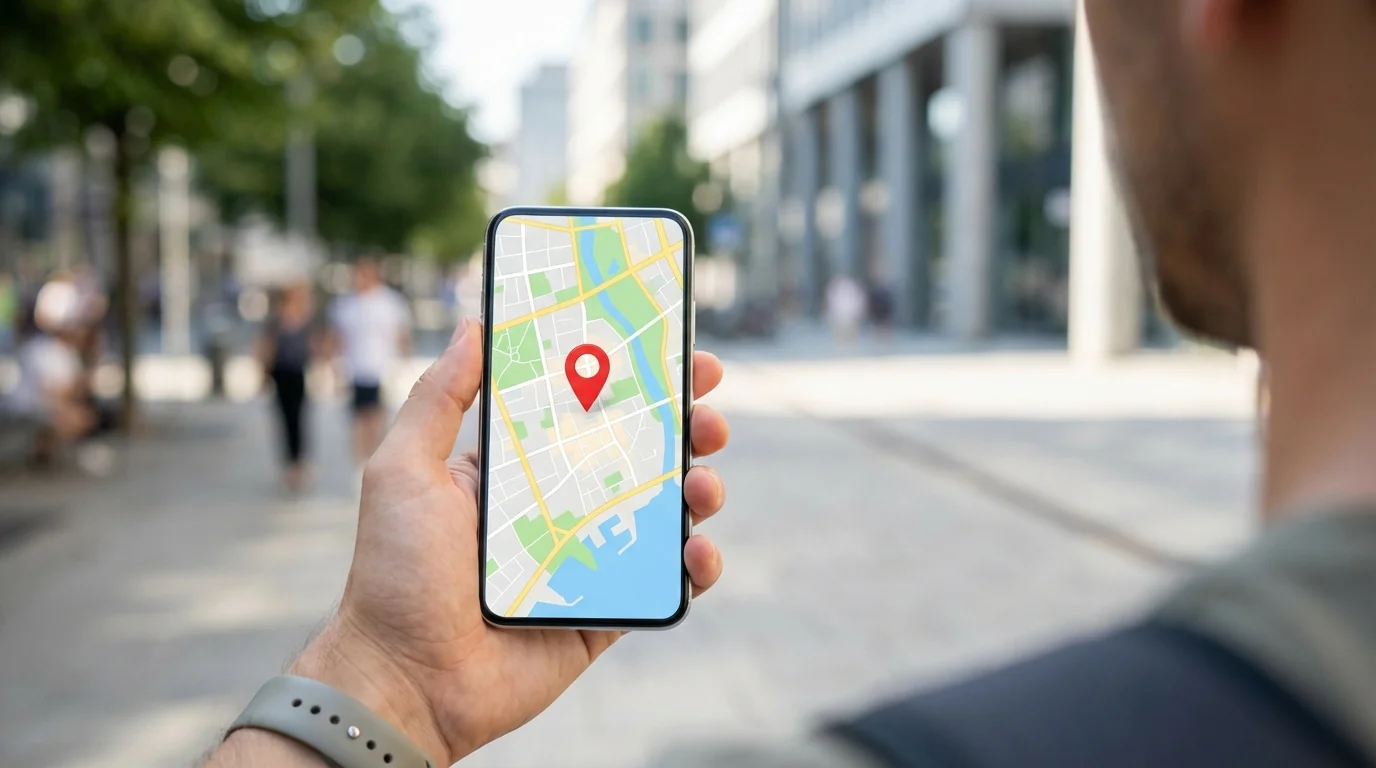
When someone’s hot water cylinder bursts at 7am, they don’t ring around asking for recommendations. They grab their phone and Google “Plumber Whangārei.”
If you aren’t on page one, you don’t exist.
And here’s the thing that might surprise you: 1.5 billion searches every month include “near me”. That’s billion. With a B.
82% of smartphone users conduct “near me” searches when they need something. And 76% of people who search for something nearby on their phone visit a related business within 24 hours.
So when someone’s searching for a sparkie, plumber, or builder in Whangārei at 7am on a Tuesday? You’ve got about 15 seconds to prove you’re the one they should ring.
Why Most Local Businesses Are Invisible on Google
Look, I get it. You’re brilliant at what you do. You’ve got years of experience, loyal clients, great word-of-mouth. But when someone new searches for your service, Google doesn’t know any of that.
Google is basically a massive filing cabinet. And right now, your business card is either:
- In the front drawer where people can find it easily
- Buried somewhere in the middle
- Not in the filing cabinet at all
The difference between those three scenarios? How well you’ve told Google what you do and where you do it.
The Three Signals Google Actually Cares About
Google wants to give searchers the most relevant, reliable answer. To decide where you rank, its algorithm looks for three specific signals:
1. Relevance
Does your website actually say what you do and where you do it?
You’d be shocked how many tradies have websites that say things like “Quality service across the region” without ever naming the town they’re actually licensed and working in.
Google’s algorithm isn’t psychic. If your site doesn’t explicitly say “Electrician in [your town]” or “Plumber servicing [your region],” Google can’t confidently match you to local searches.
2. Distance
Are you verified on Google Maps?
This one’s huge. Google Business Profile (formerly Google My Business) is how Google knows where you’re actually located.
If someone in Whangārei searches “electrician near me,” Google uses their location to show businesses closest to them. If you’re not on Google Maps with a verified listing? You’re not even in the running.
(And no, just having a Facebook page doesn’t cut it, more on that in a sec.)
3. Prominence
Do you have a fast, secure website that validates your business?
This is where things get interesting. Google looks at:
- How fast your site loads
- Whether it’s secure (HTTPS)
- The quality of your content
- Reviews and ratings
- How many other reputable sites link to you
Think of prominence as your digital street cred. The more Google trusts you, the higher you rank.
Why a Facebook Page Isn’t Enough (Sorry)
I know, I know. You’ve got a Facebook page. You post updates. Your clients engage with you there.
But here’s the problem: Facebook is a walled garden.
Google’s crawlers (the bots that index the internet and decide rankings) can’t easily read everything inside Facebook. Posts, photos, reviews, most of it is locked behind Facebook’s platform.
That means when someone Googles “Builder Whangārei,” your Facebook page is competing with actual websites. And websites almost always win.
What You Actually Need
To rank locally, you need:
- A dedicated domain (yourname.co.nz, not facebook.com/yourname)
- Clean, crawlable code that tells Google exactly what you do and where
- A Google Business Profile that’s verified and up-to-date
- Location-specific content on your site (not just generic “contact us” pages)
The Mobile Search Reality
Here’s a stat that should make every local business owner pay attention:
84% of local searches happen on mobile devices.
That means someone’s standing in their kitchen with water pouring out of a pipe, frantically Googling “emergency plumber near me” on their phone.
Your website needs to:
- Load fast (like, really fast, under 3 seconds)
- Be easy to read on a small screen
- Have your phone number visible without scrolling
- Show your service area clearly
If any of those things are missing? They’re ringing the next person on the list.
Why We Build on Astro (And Why It Matters for You)
At YourHQ, we build our sites on Astro specifically because the code is lightweight and clean, and Google’s crawlers love it.
Here’s why that matters:
Traditional websites load a tonne of JavaScript (the code that makes things interactive). That slows down your site and makes it harder for Google to read.
Astro sites are built as static HTML, super fast, super clean, and instantly crawlable by Google.
The result? Better rankings. Faster load times. More visibility.
(And no, you don’t need to understand any of that tech stuff. You just need to know it works.)
Getting Started: The Bare Minimum to Rank Locally
If you’re reading this thinking “Shit, I haven’t done any of this,” don’t panic. Here’s where to start:
1. Claim Your Google Business Profile
Go to business.google.com and claim your listing. If one already exists (Google sometimes creates them automatically), claim it and verify it.
Fill out everything:
- Business name
- Address (or service area if you don’t have a physical location)
- Phone number
- Business hours
- Categories (be specific: “Electrician,” not just “Contractor”)
- Photos of your work
2. Get a Real Website
Not a Facebook page. Not a landing page someone made you in 2015. A real, functioning website with:
- Clear service descriptions
- Your service areas listed explicitly (your town, the suburbs you cover, your wider region)
- Contact info on every page
- Mobile-friendly design
- HTTPS security (the little padlock in the browser)
3. Use Location Keywords Naturally
Don’t just say “We provide quality electrical services.”
Say “We’re a locally owned electrical company serving [your town], [the two or three suburbs next door], and the wider [your region] area.”
See the difference? Google does too.
4. Get Reviews (And Respond to Them)
75% of consumers read online reviews before choosing a local business. And Google uses reviews as a ranking factor.
Ask happy clients to leave a Google review. Respond to all reviews (yes, even the dodgy ones, professionally, of course).
The Bottom Line
46% of all Google searches have local intent. Nearly half of everyone searching is looking for something nearby.
If you’re a tradie, a builder, a plumber, a sparkie, you need to be showing up in those searches. Because the person searching at 7am with a burst pipe isn’t going to scroll to page two.
They’re ringing whoever Google shows them first.
Make sure it’s you.
Frequently Asked Questions
How long does it take to rank on Google locally?
Local SEO typically takes 3-6 months to see significant results, but you can start appearing in Google Maps within days once your Google Business Profile is verified. The key is consistency, optimising your website, gathering reviews, and keeping your business information up-to-date all contribute to faster rankings.
Do I need a physical address to rank locally?
Not necessarily. Service-area businesses (like mobile mechanics or home cleaners) can rank locally without a physical storefront by properly configuring their Google Business Profile with service areas instead of a street address. However, you must verify your business through other methods like phone or video verification.
What’s more important: Google Business Profile or my website?
Both. Your Google Business Profile gets you on the map (literally), but your website validates your credibility and helps you rank in regular search results. Think of your Google Business Profile as your shopfront and your website as the showroom. You need both to capture the full range of local searches.
How many reviews do I need to rank well locally?
While there’s no magic number, businesses with more recent, high-quality reviews generally rank better. The quality and recency matter more than quantity, five recent 5-star reviews with detailed comments outperform 20 old reviews with no detail. Aim for a steady stream of authentic reviews rather than a one-time push.
Can I rank in multiple towns or cities?
Yes, but you need location-specific content for each area you serve. Create dedicated service pages for each major location (e.g., “Electrician in Whangārei,” “Electrician in Kamo”) with unique content about serving that area. Don’t just duplicate the same content across multiple pages, Google will penalise that.
References
- Backlinko, 24 Must-Know Local SEO Statistics for 2025, 46% of Google searches have local intent; 75% of consumers read online reviews when researching local businesses
- Cube Creative, Convert “Near Me” Searches to Service Calls, 82% of smartphone shoppers conduct “near me” searches; 28% of nearby searches lead to purchase
- PinMeTo, 30 Local Search Stats, 76% of people who search for something nearby visit a business within a day
- SEO.com, Top 10 Local SEO Statistics, 1.5 billion searches each month contain “near me”
- SeoProfy, 75 Local SEO Statistics for 2025, 84% of local searches conducted on mobile; 78% of mobile searches lead to purchases
- Google Support. Google Business Profile verification process and requirements
- Back9 NZ. Google Business Profile verification methods available in New Zealand
- Center.ai. Google Business Profile ranking factors: relevance, distance, and prominence
- Astro Documentation. Static site generation benefits for SEO performance and crawlability
- AstroJS.dev. How Astro improves Core Web Vitals and search rankings through zero-JS architecture