Does Your Online Presence Match Your Salon's Prices?
20 December 2025 · By Lian
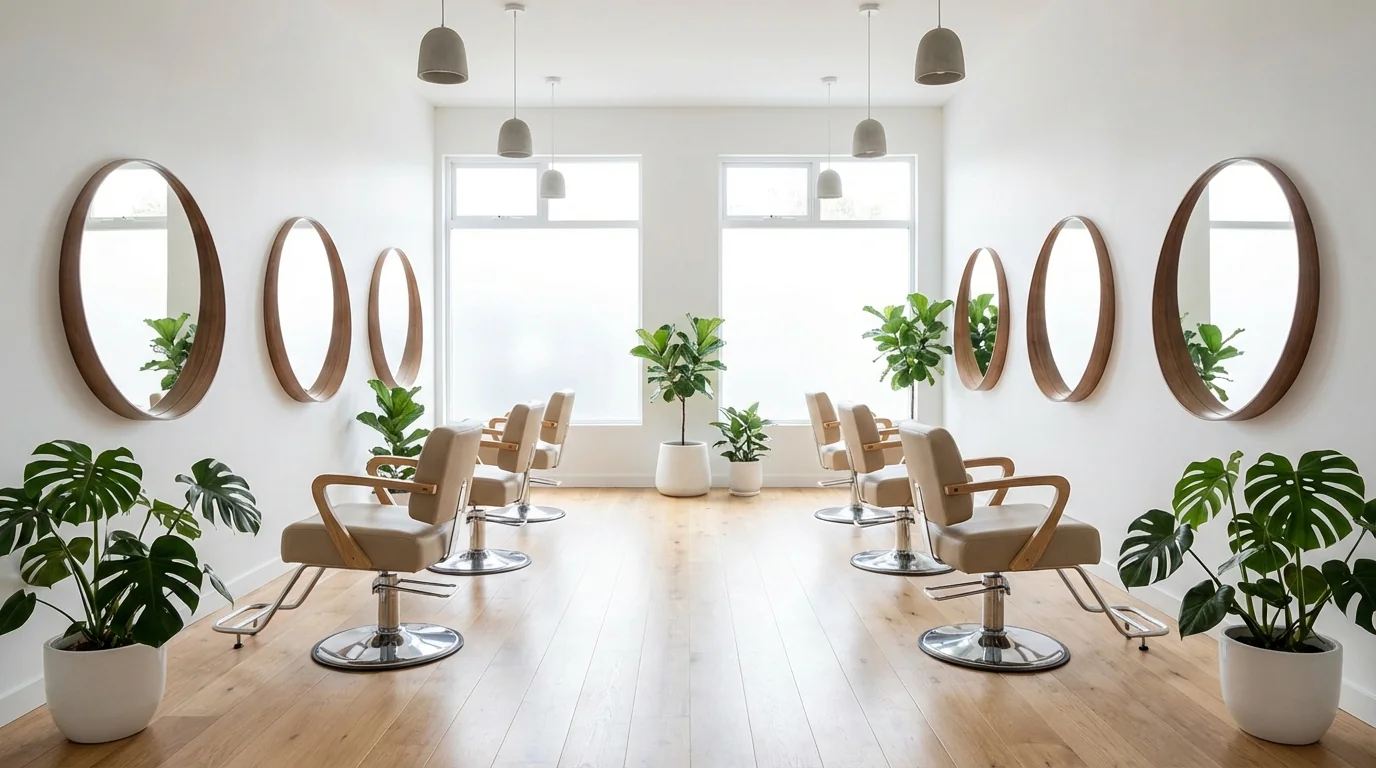
In the tech world, we talk about “User Experience” (UX). It’s how a person feels when interacting with a system.
If a client walks into your salon, the UX is likely incredible. Beautiful lighting. High-end products. Maybe good coffee. Comfortable chairs. A curated vibe. You’ve invested thousands, maybe tens of thousands, into creating that experience.
And you charge accordingly. Because you know premium experience justifies premium pricing.
But here’s the question that keeps me up at night: What’s the UX before they walk in?
Because if a potential client clicks a link in your Instagram bio and lands on a messy, generic Linktree page, or worse, a broken mobile site that looks like it was built in 2015, the UX is cheap.
And there’s a cognitive dissonance happening in their brain: “They want $350 for a colour, but they won’t spend $50 on a proper website?”
The Disconnect Between Physical and Digital
Let me paint a picture for you.
Imagine you’re looking for a new hair salon. You’ve heard great things about two salons from different friends. Both specialise in balayage. Both charge around $350-400 for a full colour.
Salon A: You Google them and find a beautiful website. It loads instantly on your phone. The portfolio showcases their best work, before and after photos, different hair types, different colour techniques. There are testimonials from real clients. The booking system lets you choose your preferred stylist and see available times. You can book right there at 10pm on a Sunday without having to message anyone.
Salon B: You Google them and find… a Facebook page with sporadic posts, and a Linktree in their Instagram bio. You click the Linktree. It’s the free version with Linktree branding all over it. There are links to “Book Now” (which takes you to another platform), “View Portfolio” (which goes to an Instagram feed you have to scroll through endlessly), and “Price List” (which is a blurry screenshot of a PDF uploaded six months ago).
Which salon feels more premium?
Be honest. You already know the answer.
And here’s the uncomfortable truth: 94% of first impressions are design-related.
Not your actual skill. Not your years of experience. Not even your prices.
Your design.
The Premium Perception Test: Are You Passing?
Here’s a test I want you to do right now (yes, actually do it):
- Pull out your phone
- Open Instagram in incognito/private mode (so you’re seeing your profile as a new client would)
- Click the link in your bio
- Be honest: Does what you land on feel as premium as your salon?
If you hesitated for even a second, you’ve failed the Premium Perception Test.
What Premium Actually Signals
Premium pricing isn’t just about charging more. It’s about creating a perception of quality, exclusivity, and value.
54% of consumers say premium products are made with high-quality materials or ingredients. They’re not just paying for the product, they’re paying for the experience, the expertise, the care, the attention to detail.
When you charge $350 for a colour, you’re not just charging for the product in the bowl. You’re charging for:
- Your years of training and experience
- Your artistic skill and colour theory knowledge
- The consultation where you listen and advise
- The luxury products you use
- The beautiful space you’ve created
- The coffee, the music, the vibe
But if your website doesn’t reflect that level of care and investment, you’re undermining your own pricing.
A low-quality website signals (whether you intend it or not): “I don’t value presentation. I cut corners. I’m not serious about my business.”
The First Impression Window: You Have 0.05 Seconds
Let’s talk about the brutal reality of first impressions online.
It takes 0.05 seconds, that’s 50 milliseconds, for users to form an opinion about your website.
You don’t get time to explain. You don’t get to walk them through your process. You don’t get to justify why your Linktree page looks the way it does.
They see it. They judge. They decide.
And 88% of users are less likely to return to a website after a poor user experience.
That means if someone lands on your messy link page or your broken website once, they’re probably not coming back. You’ve lost them.
What’s Happening in Those First 0.05 Seconds
75% of users judge a company’s credibility based on website design alone.
Not your Instagram feed. Not your reviews (though those matter too). Your website design.
Research shows that when the same content is presented with different levels of aesthetic treatment, the content with higher aesthetic quality is judged as more credible.
Translation? Even if your work is brilliant, if your website looks cheap, people assume you’re less skilled than you actually are.
The amelioration effect of visual design means that good design makes your content, your services, your prices, your expertise, seem more credible.
Bad design does the opposite.
The Linktree Problem: Why Free Tools Undermine Premium Brands
Look, I get it. Linktree is convenient. It’s free (or cheap). It takes five minutes to set up.
But here’s what Linktree actually signals to potential clients:
1. You’re Not Established
75% of users judge a company’s credibility based on website design. When they see a Linktree page instead of a proper website, they think: “Are they even a real business?”
Linktree pages feel generic. They look like everyone else’s. There’s no personalisation, no branding depth, no story.
2. You Haven’t Invested in Your Business
If you’re charging $350 for a colour but won’t spend a few thousand dollars on a professional website, what does that say?
It says: “I’m not serious enough about this business to invest in proper infrastructure.”
And if you don’t take your business seriously, why should they trust you with their hair?
3. You’re Still Amateur
Linktree is associated with influencers, creators, and side hustles. There’s nothing wrong with that, but it’s not the vibe a premium salon should be giving off.
A custom website instantly communicates professionalism and authority. It shows you’re established. You’re legit. You’ve built something real.
The Actual Cost of Using Linktree
One business case study showed that a coach using Linktree noticed potential clients hesitating to book because of lack of information about expertise and credentials. After switching to a custom website with testimonials, blog posts, and an FAQ section, bookings increased by 30%.
30%.
Now imagine that for your salon. If you’re currently getting 20 new clients per month through online channels, a 30% increase is 6 more clients. At $350 per visit, that’s $2,100 extra per month. That’s $25,200 per year.
How much does a professional website cost again? Maybe $3,000-5,000.
The maths isn’t hard.
High Tech, High Touch: The Digital Foyer Concept
Your website should function as a digital foyer, the first room clients enter before they physically walk into your salon.
Think about your actual salon foyer. You’ve probably spent time making it beautiful:
- Good lighting
- Clean, organised space
- Branded signage
- Maybe a signature scent
- High-quality finishes
You didn’t slap up some random Bunnings shelves and call it a day, right?
So why would you do the digital equivalent with a free Linktree?
What a Digital Foyer Should Include
A properly designed website acts as a curated, premium entry point that:
1. Reflects Your Physical Space
Consistent design across all touchpoints builds familiarity and trust. Your website’s colours, fonts, imagery, and tone should match your salon’s vibe.
If your salon is modern and minimalist, your website should be too. If it’s warm and bohemian, that aesthetic should translate digitally.
Inconsistent experiences confuse customers and make them question whether they can trust your brand.
2. Showcases Your Work Properly
Not an endless Instagram scroll. A curated portfolio organised by service type, colour technique, or hair type.
Before and after photos. Different angles. Different lighting. Real examples of your expertise.
3. Builds Credibility Through Social Proof
Displaying testimonials, reviews, and case studies plays a powerful role in building trust. Potential clients want to know others have had positive experiences.
Social proof is a psychological phenomenon, people trust the actions and opinions of others.
Your website is where you showcase that proof in a permanent, searchable, indexed format (unlike Instagram Stories that disappear after 24 hours).
4. Makes Booking Effortless
Over 50% of salon online bookings happen outside standard operating hours.
That means if someone can’t book instantly through your website at 9pm on a Wednesday, you’re losing that booking.
“DM to book” is costing you clients. We covered this in the Instagram dependency post, but it’s worth repeating: people want convenience. They want to book when they’re ready, not when you’re available to reply.
The Psychology of Premium Pricing (And Why Your Website Matters)
Let’s get nerdy for a second about pricing psychology.
Premium pricing creates a perception of quality and exclusivity. When something costs more, our brains assume it’s worth more.
But here’s the catch: Premium pricing only works when it’s backed by a strong brand identity, outstanding quality, and a customer experience with no friction in it.
The Ritz-Carlton hotel chain is a perfect example. They charge premium prices, and people pay happily because every touchpoint, from the elegant ambience to the high-end service to the website, reinforces that premium positioning.
If your pricing is premium but your website is budget, you’ve created a mismatch.
And when there’s a mismatch, potential clients don’t think “Wow, what a deal!” They think “Something’s off here.”
The Cognitive Dissonance Problem
If your target audience expects premium quality, pricing too low (or presenting too cheaply) may hurt credibility.
The opposite is also true: If you price like a premium salon but present like a budget one, people won’t trust your pricing. They’ll assume you’re overcharging for mediocre service.
Your website needs to justify your prices before the client even sits in your chair.
What You Actually Need (It’s Simpler Than You Think)
You don’t need a 20-page website with all the bells and whistles.
You need a clean, professional digital foyer that:
1. Loads Fast on Mobile
74% of users are more likely to return to a mobile-friendly website. And 38% will stop engaging if the content or layout is unattractive.
Your website needs to load in under 3 seconds. It needs to look beautiful on a phone. It needs to be easy to navigate with one thumb.
2. Showcases Your Best Work
A curated portfolio. Not your entire Instagram archive, your best work, organised in a way that makes sense.
By service type (balayage, colour correction, extensions). By hair type (curly, fine, textured). By style (editorial, natural, vibrant).
3. Makes Booking Effortless
Online booking integrated into your site. Choose your stylist, choose your service, choose your time. Book instantly. Receive confirmation.
No back-and-forth. No DMs. No friction.
4. Builds Trust
Testimonials from real clients. Your credentials and training. Your salon’s story. Why you do what you do.
Transparency builds trust. The more information you provide, your values, your process, your expertise, the more confident people feel choosing you.
5. Looks As Premium As Your Salon
High-quality imagery. Clean design. Consistent branding. Professional copy.
When content is presented with higher aesthetic treatment, it’s judged as more credible.
Your website should immediately invoke confidence, enjoyment, and positive emotions that make people want to stay, and book.
The Bottom Line: Don’t Let Your Digital Infrastructure Undervalue Your Artistic Skill
You’re talented. You’ve invested years in perfecting your craft. You’ve built a beautiful physical space. You’ve curated an incredible client experience.
Don’t let a cheap website or a free Linktree page undermine all of that.
Your digital presence should justify your premium pricing, not contradict it.
If you’re charging $350 for a colour, your website should feel like a $350 experience.
Because 75% of people are judging your credibility based on your website design alone.
Make sure they’re judging you correctly.
Frequently Asked Questions
Why does my salon need a website if I have Instagram?
Instagram is brilliant for visibility, but 94% of first impressions are design-related, and it takes just 0.05 seconds for users to form an opinion about your credibility. When potential clients research salons, 75% judge your credibility based on website design alone. A Linktree or Instagram profile doesn’t convey the same premium positioning as a custom website, especially when you’re charging premium prices.
What’s wrong with using Linktree for my salon?
Linktree signals “not established” or “side hustle” rather than professional business. It lacks personalisation and can make clients question your legitimacy, if you’re charging $350 for colour but won’t invest in a proper website, it creates cognitive dissonance. Case studies show businesses increased bookings by 30% after switching from Linktree to custom websites.
How much does a professional salon website cost compared to lost bookings?
A professional salon website typically costs $3,000-5,000. However, over 50% of salon bookings happen outside business hours when clients can’t DM you, and poor UX causes 88% of users not to return. If a proper website with online booking increases your monthly bookings by even 20%, that’s potentially $20,000-30,000+ in additional annual revenue for a premium salon.
Does website design actually affect how clients perceive my pricing?
Yes. Research shows that when identical content is presented with different aesthetic treatments, higher aesthetic design is judged as more credible, this is called “the amelioration effect”. Premium pricing only works when backed by strong brand identity and seamless customer experience. If your pricing is premium but your website looks budget, clients assume something’s “off” and may not book.
What should a premium salon website include?
At minimum: fast mobile-responsive design, curated portfolio organised by service type, client testimonials and social proof, integrated online booking system (50%+ of bookings happen outside business hours), clear service descriptions and pricing, high-quality imagery matching your salon aesthetic, and professional branding consistent with your physical space. The website should function as a “digital foyer” that reflects the same care and investment as your physical salon.
References
- UserGuiding / UXCam / Maze, 94% of first impressions are design-related; it takes 0.05 seconds for users to form website opinions; 88% won’t return after poor UX experience
- SWEOR / The Breezy Company / Paradigm Marketing, 75% judge company credibility on website design; 38% stop engaging if content/layout unattractive; 74% more likely to return to mobile-friendly sites
- Insly Digital / August Agency. Aesthetic visual design increases perceived credibility (“amelioration effect”); high aesthetic treatment conveys professionalism and invokes confidence within first seconds
- Noethera / SuperProfile. Linktree vs custom website: 75% judge credibility on website; Linktree lacks personalisation and appears generic; case study showed 30% booking increase after switching to custom site
- Shopify / Price2Spy / Nine Blaess. Premium pricing creates perception of quality and exclusivity; only works with strong brand identity and a frictionless customer experience; pricing/presentation mismatch hurts credibility
- NIQ, 54% of consumers identify premium products by high-quality materials/ingredients; price signals value and care
- MioSalon / Kitomba. Over 50% of salon online bookings occur outside standard hours; online booking provides 24/7 convenience and reduces lost bookings; clients expect instant booking capability
- Marketing Insider Group. Owned media (websites) provide total control, build trust, contribute most to organic search rankings; 69% of marketers investing in owned-media assets
- dingg / SalonScale. Clear pricing builds client trust; transparent systems improve salon efficiency and profitability; modern clients expect convenient digital experiences